Explore Each Pentagram
Magickal Diagrams: The Greater Pentagram
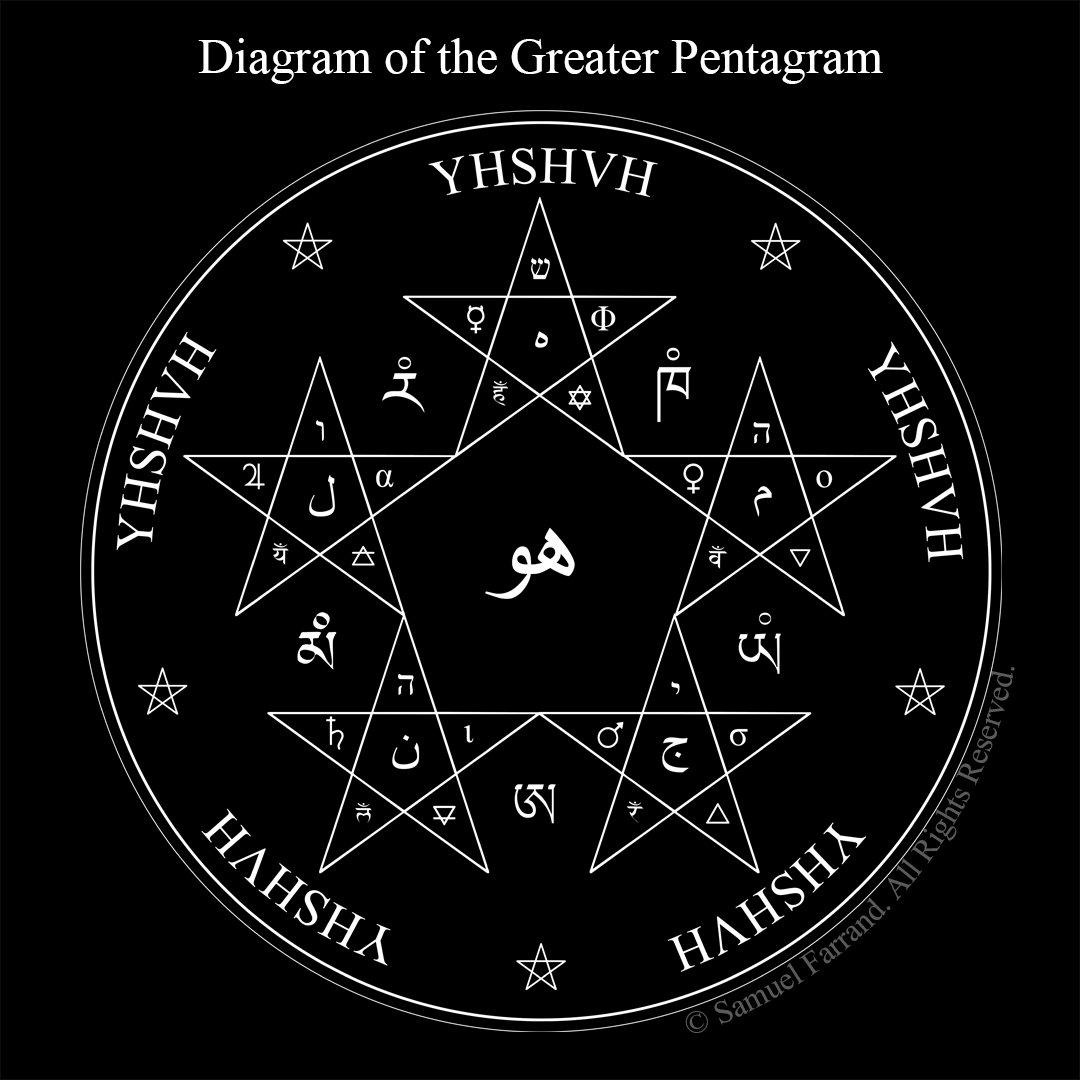
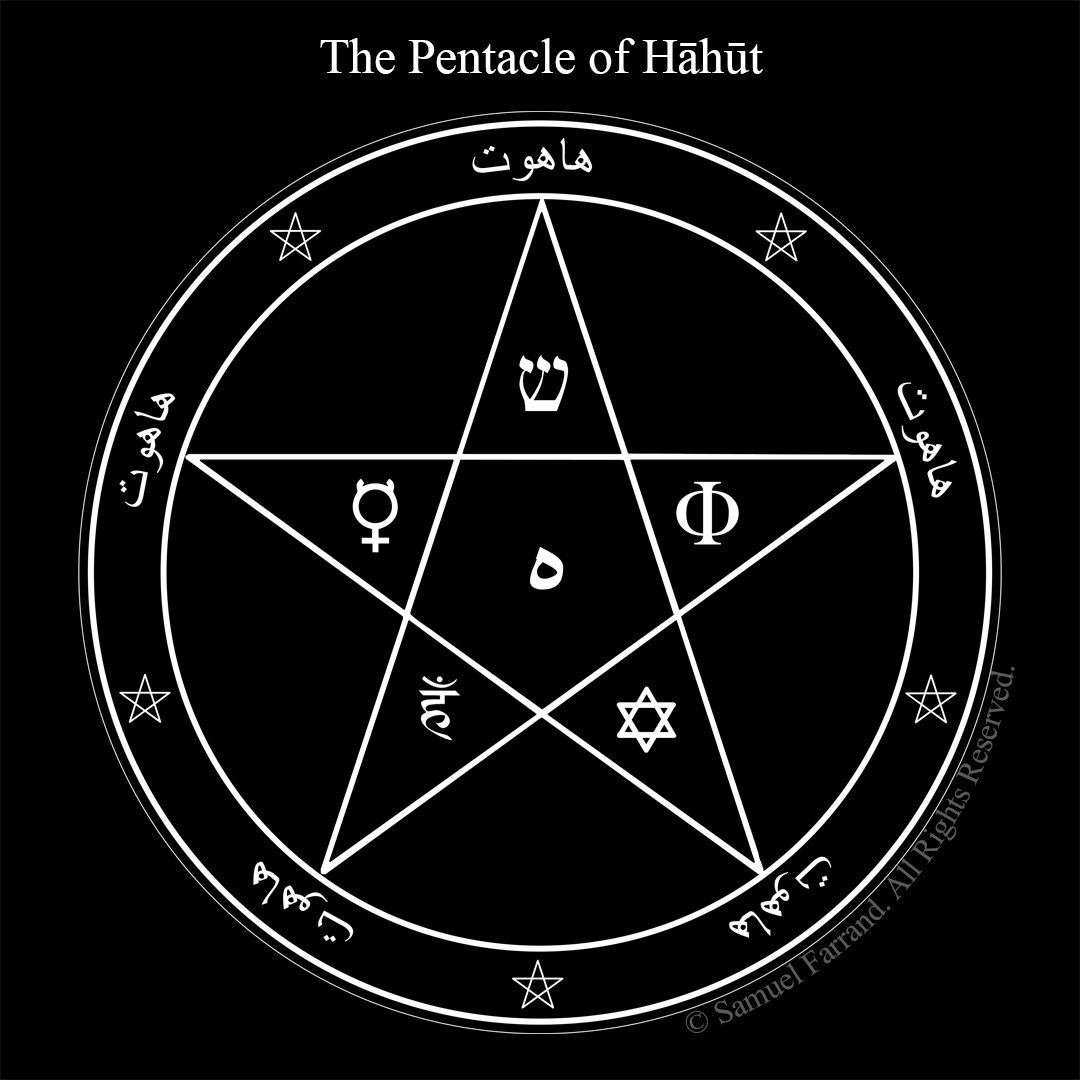
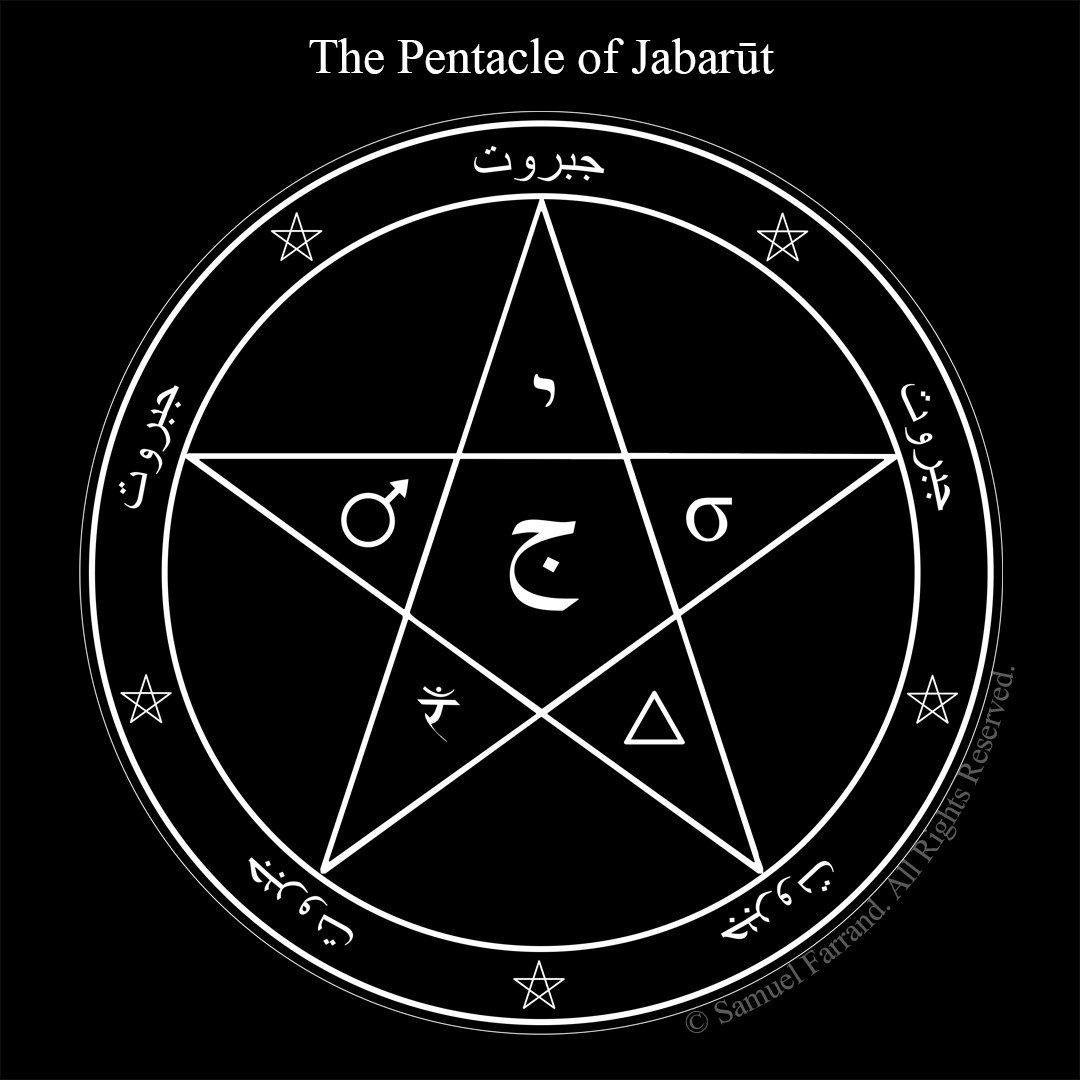
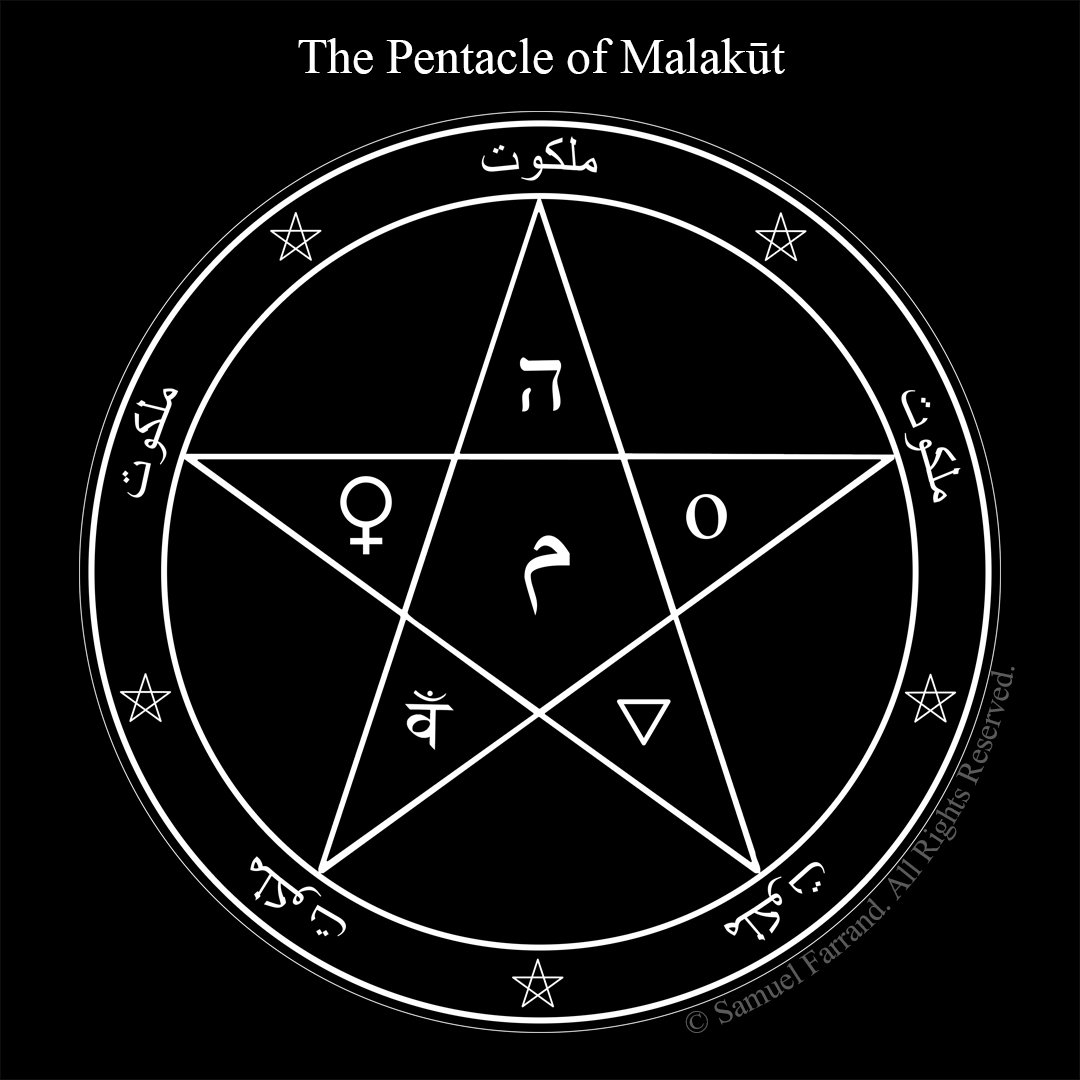
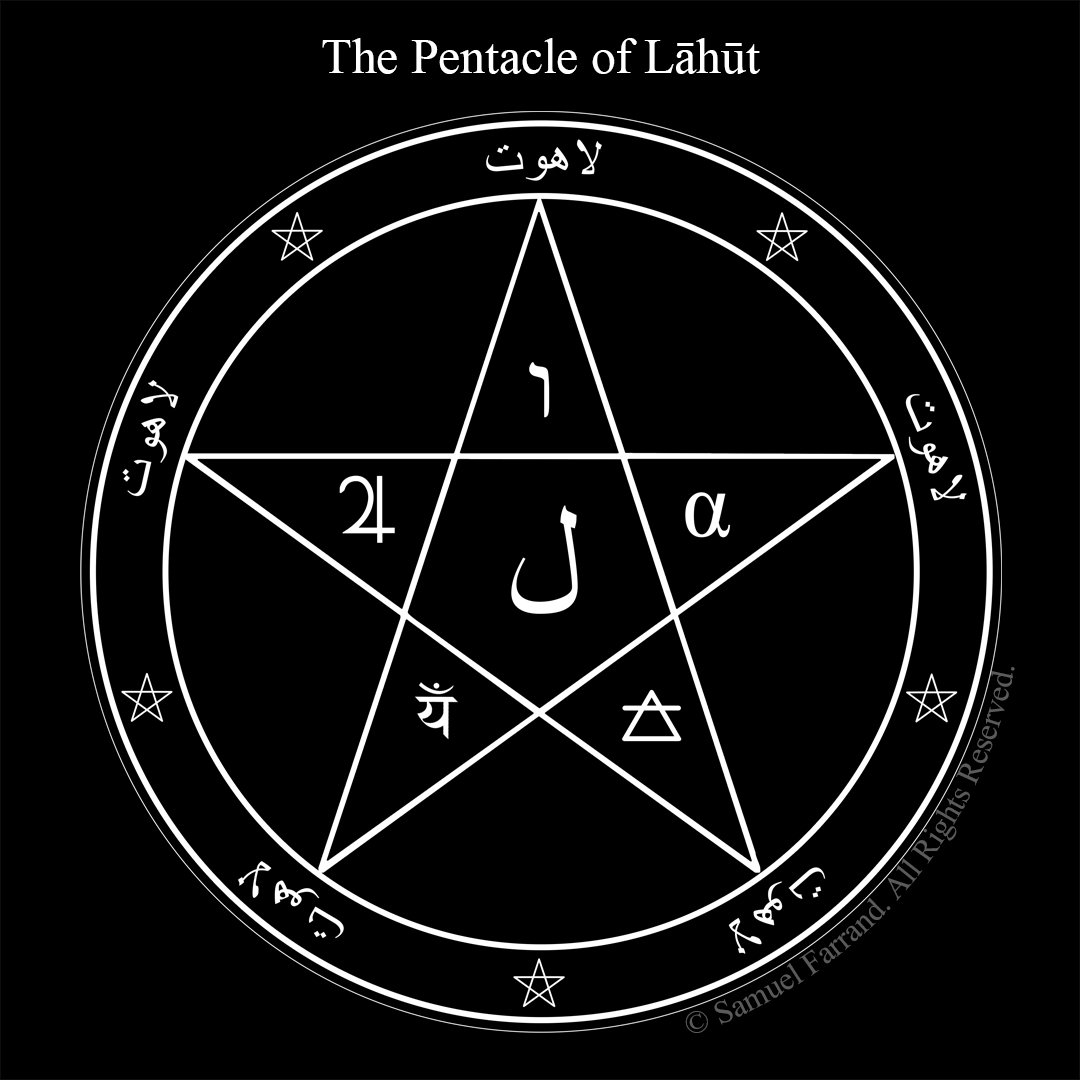
The Greater Pentagram is a diagram from the Occultum Lapidem, a unified magical correspondence structure that bridges western and eastern esoteric traditions into a single visual grammar.
At the absolute center of the diagram sits هو Huwa, the Arabic word meaning simply He, the most intimate and direct divine name in Sufi practice. Huwa is not a description of God but a pointing toward pure existence itself, the breath before language, the reality before form. It is placed at the center not as a declaration of Islamic theology but as the most precise available symbol for the undifferentiated divine source that every tradition in this diagram is attempting to approach from its own direction.
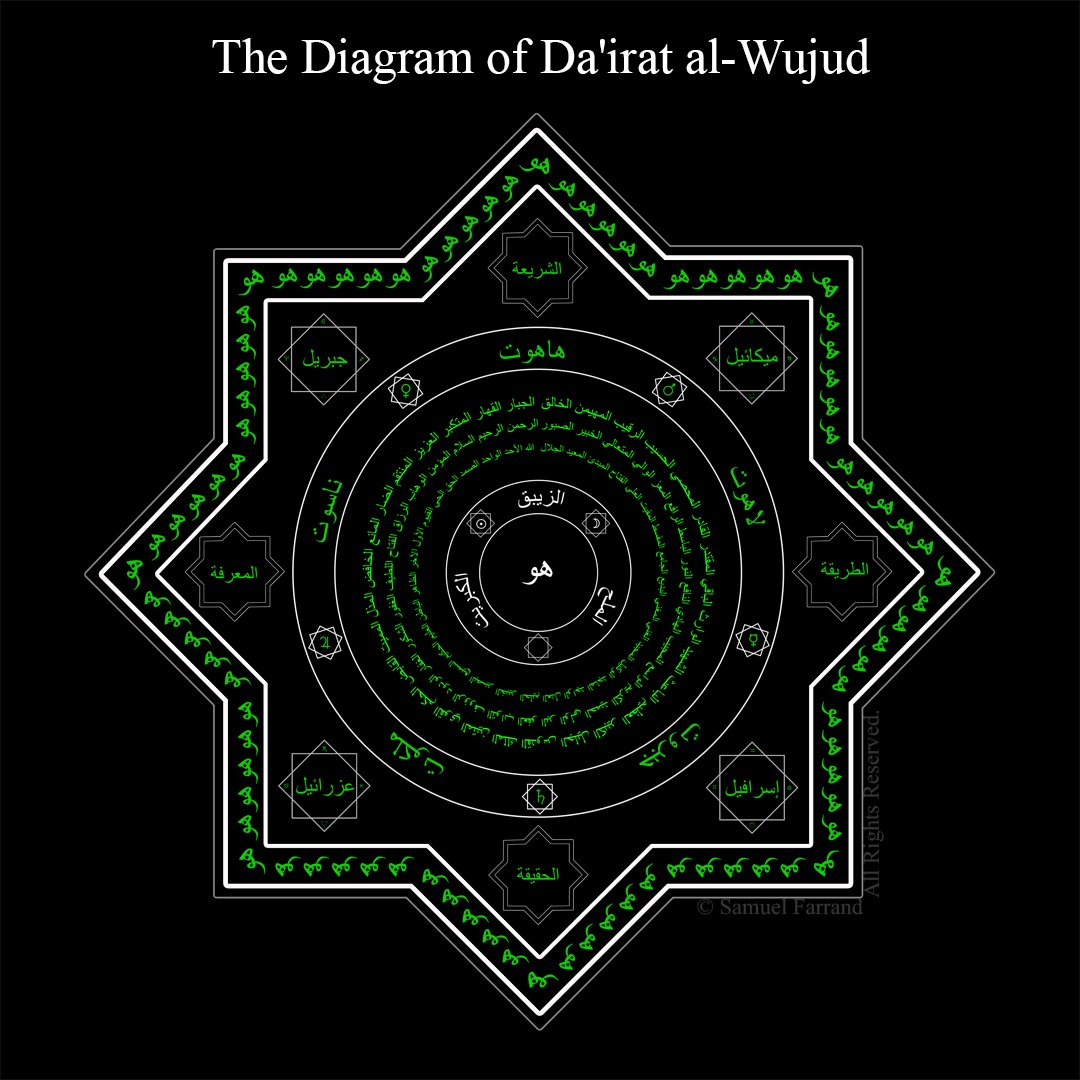
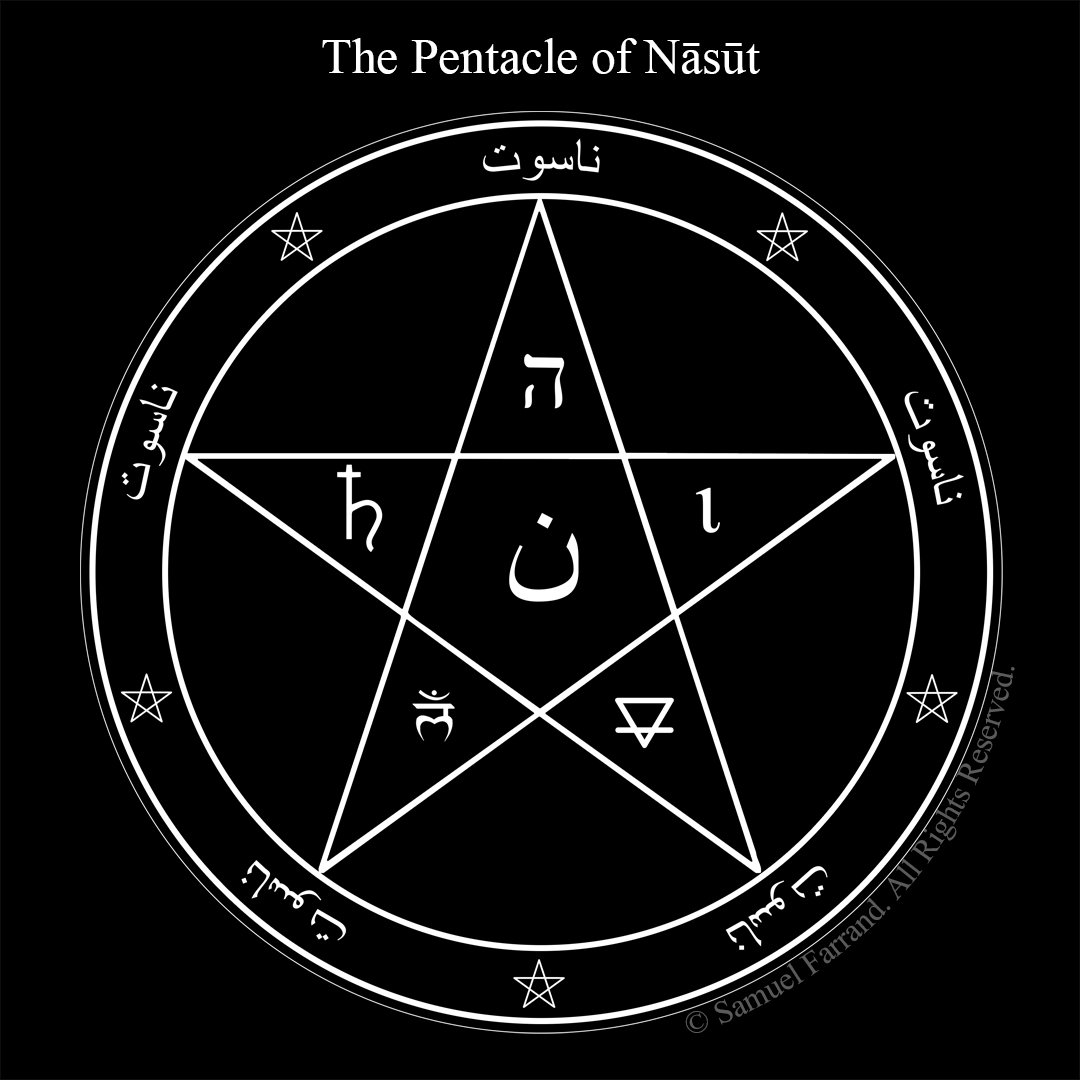
The five pentagrams arranged around this center are governed by the Five Divine Presences of Sufi metaphysics, the Hadarat, which describe five levels of reality descending from the pure divine essence into the fully manifest material world. These are Hahut, Lahut, Jabarut, Malakut, and Nasut. This framework was selected as the organizing architecture of the diagram not because Occultum Lapidem is an Islamic system but because the Hadarat represent one of the most formally precise and cosmologically complete descriptions of fivefold emanation available in any esoteric tradition. They provide the scaffolding onto which five other traditions are mapped as witnesses to the same underlying reality.
The perimeter of the diagram is sealed by YHSHVH, the Pentagrammaton, written five times in the threshold space between two concentric circles. YHSHVH is the Tetragrammaton with the Hebrew letter Shin inserted at its center, producing the name Yeheshuah used in Golden Dawn ceremonial practice as a divine name whose five letters correspond to the five points of the pentagram and the five elements. Its fivefold repetition around the perimeter mirrors the fivefold geometry of the interior and seals the entire system as a unified magical object.
Between the perimeter and the inner diagram, the five Tibetan elemental symbols mark the threshold zone. These are Sa for Earth, Chu for Water, Me for Fire, Rlung for Air, and Namkha for Space and Spirit. Their placement at the boundary between the sealed perimeter and the inner correspondence structure reflects their function as elemental witnesses from the Tibetan Buddhist tradition, a tradition that developed its own complete fivefold cosmology entirely independently of the Western esoteric systems that occupy the interior of the diagram. Their presence at the threshold is a deliberate acknowledgment that the elemental grammar of The Greater Pentagram is not the exclusive property of any single tradition.
The Greater Pentagram is presented as a reconstruction and a synthesis rather than a historical recovery. No single tradition has ever assembled these elements in this configuration. What this diagram proposes is that the common cosmological grammar shared by Sufi metaphysics, Kabbalistic divine naming, Greek philosophical symbolism, Hindu tantric cosmology, Western alchemy, classical planetary magic, and Tibetan elemental science is precise enough and coherent enough to be expressed in a single unified visual system. The diagram is offered as evidence of that proposition.