Magickal Diagrams: The Five Senses
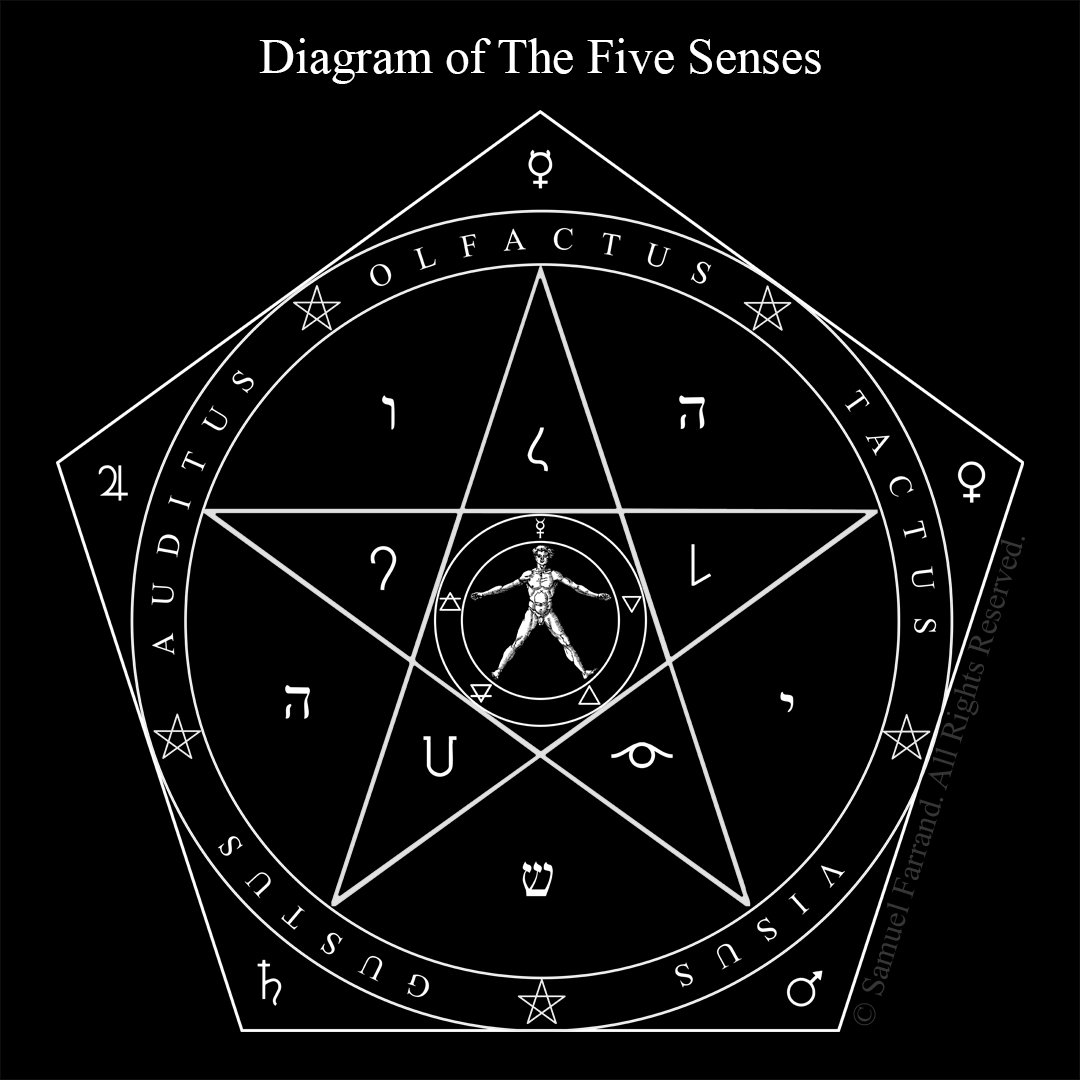
This correspondence map was created as a way to organize and visually articulate the five senses within a Western esoteric framework. Because there are no established traditional glyphs for the senses, I developed a new set specifically for this diagram, keeping them restrained, symbolic, and visually aligned with the astrological and alchemical glyph language found in Renaissance-era occult manuscripts.
The central inspiration for the image comes from Cornelius Agrippa’s Second Book of Occult Philosophy, particularly the Scale of Five and the well-known image of the human figure set within the pentagram. In Agrippa’s original model, the five visible planets, Mars, Jupiter, Saturn, Mercury, and Venus, correspond to the five points of the pentagram, while the Moon appears outside the figure and the Sun within it. Together, these seven planetary forces express the classical relationship between microcosm and macrocosm, the human body and the celestial order, as above, so below.
For this diagram, I wanted to preserve the integrity of Agrippa’s Scale of Five while also resolving certain correspondences through the lens of Western astrological tradition. Agrippa’s planetary structure remains largely intact, but I adjusted the elemental attributions of Saturn and Venus so that Saturn corresponds to Earth and Venus corresponds to Water. This allows the system to remain faithful to Agrippa’s ontological framework while also aligning more cleanly with broader Western esoteric and astrological associations.
The result is a more coherent map of the five senses, showing how each sense can be correlated with a planet and an element. From there, the system opens naturally into further layers of correspondence, allowing the senses to be mapped to the zodiac and, eventually, to the tarot. This gives the diagram a functional purpose beyond its visual structure, making it a bridge between perception, astrology, elemental theory, and divination.
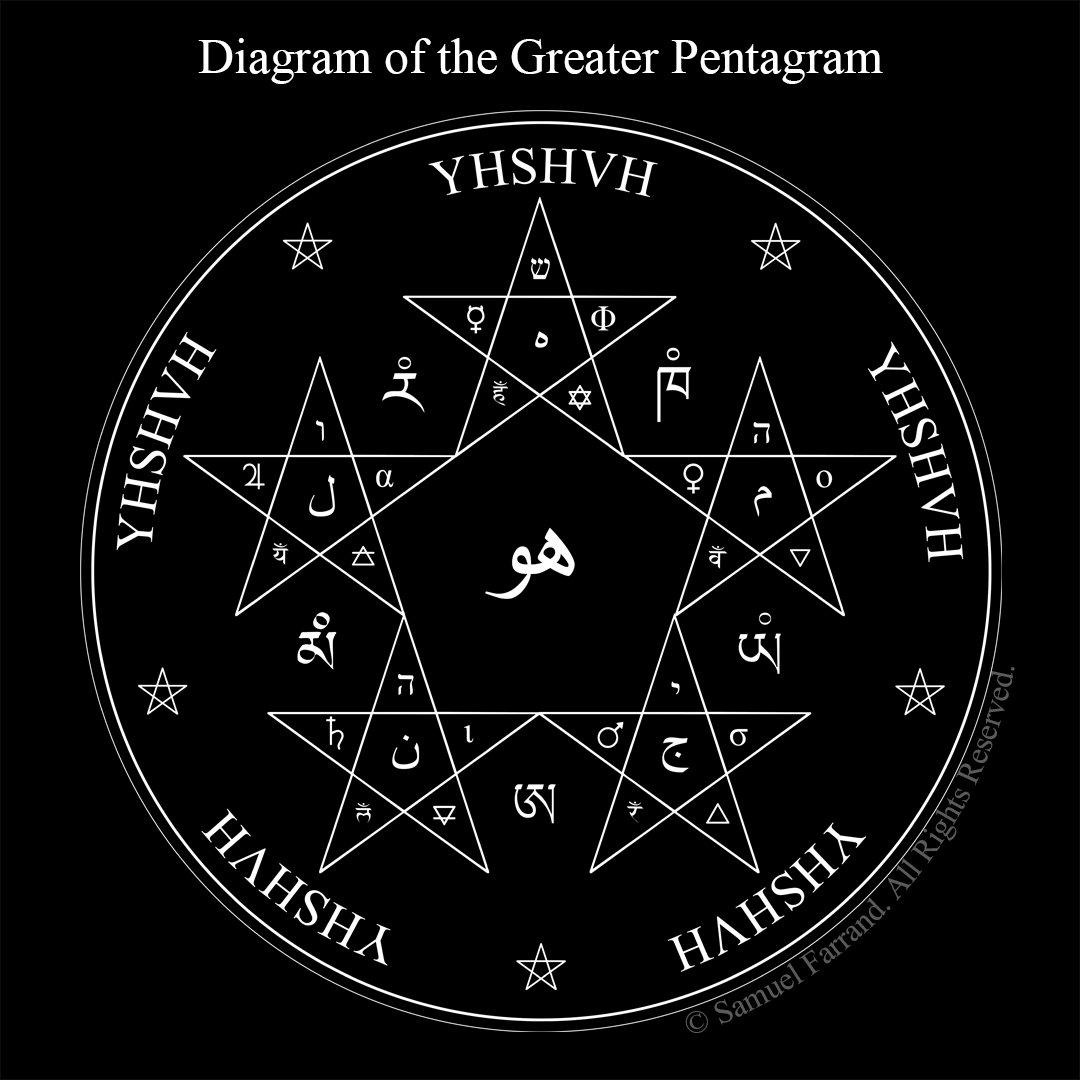
Another important challenge was determining how the elements should be arranged around the pentagram. To preserve common traditional practices while remaining consistent with the Kabbalistic Four Worlds, I assigned the points clockwise from the top as Spirit, Water, Fire, Earth, and Air. This arrangement keeps traditional pentagram ritual structures intact. At the same time, when read counterclockwise beginning with Fire, the sequence follows the order of the Four Worlds: Atziluth as Fire, Briah as Water, Yetzirah as Air, and Assiah as Earth.
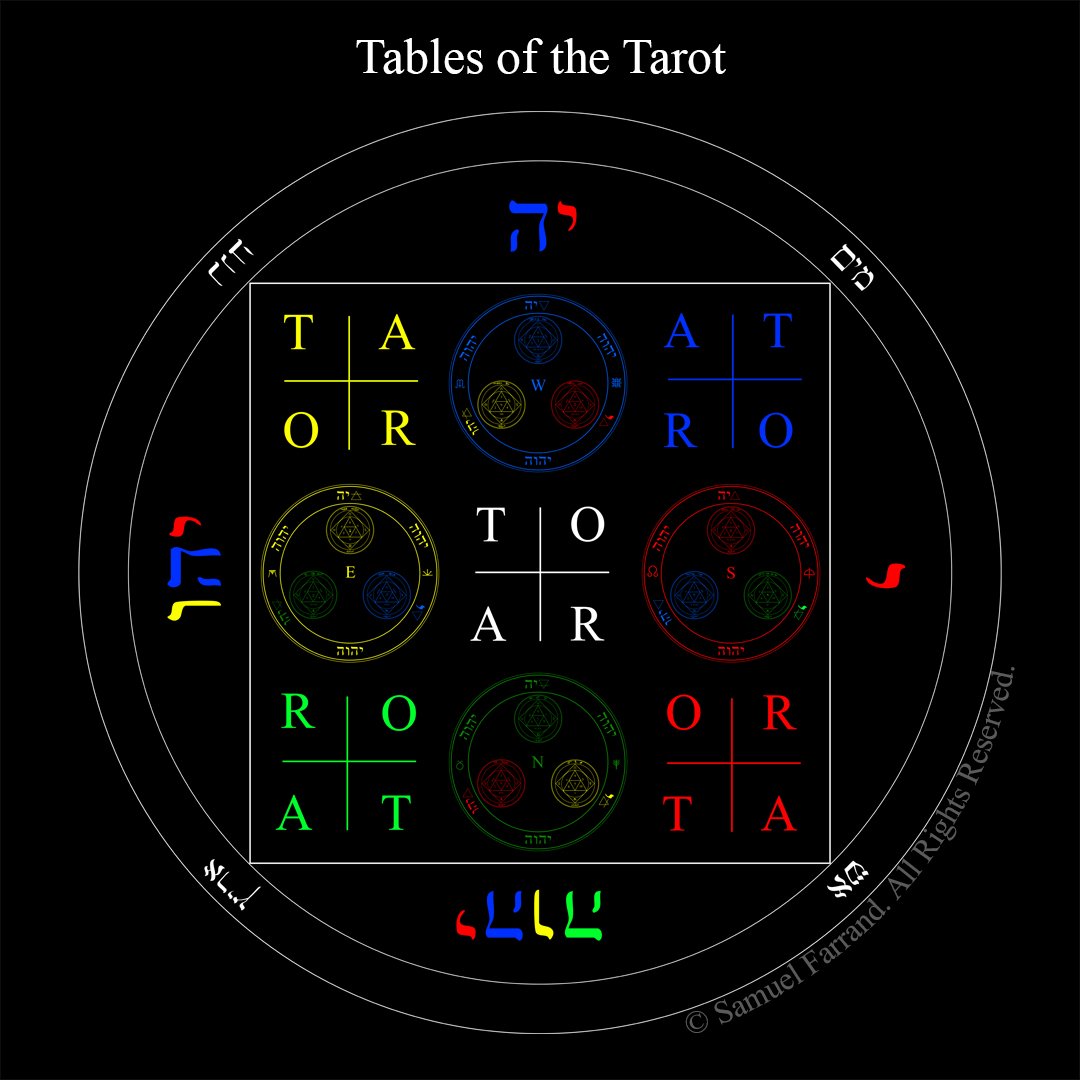
The diagram also incorporates the Hebrew letter Shin, associated with Spirit, along with the four-letter divine name, which represents the four elements and the four Kabbalistic worlds. This structure connects directly to the tarot court cards, adding another layer of symbolic continuity between the diagram and divinatory practice.
I created this map as a companion framework for my tarot deck, Aeon of Da’ath, with the intention of adding dimensionality to readings. More broadly, it reflects my interest in how numbers, symbols, and natural structures shape our perception of reality. Through repeated observation, I have found that the number five often relates to embodiment, sensation, and the way consciousness translates the physical world into experience.